Life is a series of successes and failures. I judge my year farming in 2013 to be a success for a number of reasons. I was able to build a farm business without going into debt.
Now, that comes with a very important clarification. I did find off farm income to help pay my rent, pay for my car, and cover some of my other bills. When I say that I was able to start my farm without going into debt I don't want you to think I supported myself completely from on farm income the first year. That's a little crazy.
When anyone starts any business it takes a while for the business to become profitable. I see that as the least taught lesson with people starting a farm or just getting into agriculture. There is always an exception to every rule, and everyone's situation is different. All I'm saying is that unless you have a huge savings account, keep your job when you try and start a farm.
In this episode I share exactly what my numbers are, down to the last cent. While I did my best to track my inputs and outputs there were flaws in my system that I am fixing in 2014.
Besides starting a farm it was a big year for me. My daughter Mabel was born, I bought a car, started a job outside the farm, and moved twice. I also created and solidified an online presence including blog posts, social media, this podcast, and an eBook. That is a lot to fit into one year.
So am I going to kick back in 2014 and relax? Heck no! I'm going to try and out-do myself in 2014. I have an aggressive plan for the farm I am managing now as well as my online content. The pressure was on last year, and it continues this year.
One of my favorite quotes of all times is from Leonard Bernstein. "To achieve great things two things are necessary, a plan, and not quite enough time."
I have found a true love in agriculture. Yeah yeah, my wife Kate and my daughter Mabel come before work. That's a given. I do realize however that our lives cannot always be vacation and that I need to do something to support my family. If I am going to have to work just as hard as everyone else is these days I might as well love what I do and eat well.
Farming is an ancient and noble profession. But at times, it awful. There are ups and downs just like anything else in life. If you are smart, dedicated, passionate, and willing to create a few spreadsheets when you're not seeding or planting you'll be alright!
How do you plan to balance life and farming? Believe me, it's not easy.
DO you feel like you have a handle on your numbers? Where is the money going?
--
My skills are ever-evolving as an interviewer. Thanks for taking the time to listen in, and let me know what you think. You can leave a comment below, send me an e-mail, reach me on Facebook or Twitter, or leave a 5 star rating in iTunes if you liked the show.
Are you trying to start a farm and you are looking for investment capital? What would you do if you had an extra $10,000 to invest, how about $100,000, how about ONE MILLION DOLLARS!?!? The Wall Street Journal recently published an article about successful people trying to make a living at organic or small scale farming. My thought would immediately be that if they found success in another area of business some of that should translate over to farming. Wouldn't that makes sense after all?
The answer is, "Yeah, probably." But it is not going to be ANY EASIER to farm than it is if you are starting your farm on a shoestring. There are still all the issues of huge capitol investments, mother nature, getting to know your land, working with others, and perhaps balancing your day job on top of it.
Through whatever act of luck or some higher power I have been afforded a unique opportunity both for myself and for Farm Marketing Solutions. In 2013 I started a poultry farm from scratch on a shoestring budget. It is the farm I have been talking about on the podcast all year. As we move into 2014 I am now farm manager of another farm start-up that has the benefit of a land-owner and some start up investment capital.
It is not an "infinite budget" and a lot of the capital has to be paid back. Even so I am able to purchase some things that I wish I had in the past and would like going forward as well as make improvements to the land and create something great.
In 2014 Camps Road Farm is going to be my main focus. I am rolling my farm operation in with theirs because I am running the whole show anyways. I will smartly (hopefully) use the resources at my disposal to bring a about a successful future for the farm.
The risk the wealthy are taking getting into agriculture
What you can do to encourage investors
What is the business structure of my farm
The story behind Camps Road Farm (my farm)
An important perspective from a successful entrepreneur getting into farming
Interview with David Birnbaum of Camps Road Farm:
David comes from an IT and telecommunications background. He goes into detail about his journey through life that eventually led to farm ownership in the podcast and I suggest taking the time to hear it from his perspective.
One of the things that I have greatly enjoyed about working with David on Camps Road Farm so far is that he brings a highly efficient and analytical work ethic to the farm. He spends his work weeks in Manhattan doing stuff that's above my technical understanding, and he spends his weekends on the farm, well, doing whatever I tell him to, haha.
His work on the farm allows me to have a day off here and there to spend with Kate and Mabel and for that I am grateful. The great thing is, while his expertise is not in agriculture, he has the ability to take my "to-do lists" and not only accomplish them, but add in his own problem solving as he goes.
Are you doing anything on your farm that might inspire an investor?
If you are planning on starting a farm of your own do you have the capital to get off the ground? If not how can you creatively structure your business plan to make yourself desirable for someone looking to invest in local agriculture?
Happy Holidays!!!
I cannot thank you enough as my listening audience for all the support that you have given me this year. It has been an amazing journey through 2013 and it looks to be even more wild going into 2014.
I created this podcast for you and I continue it for us. I am thankful for so much and so moved by all the feedback I get from the podcast and from Farm Marketing Solutions. Thank you for coming along with me!
Merry Christmas and Happy Holidays!
--
My skills are ever-evolving as an interviewer. Thanks for taking the time to listen in, and let me know what you think. You can leave a comment below, send me an e-mail, reach me on Facebook or Twitter, or leave a 5 star rating in iTunes if you liked the show.
A smart farmer looks for every way he or she can use what they already have on farm to help make the farm money. Farm Stays are a great way to use the infrastructure that you already have to increase your profits, diversify your income, and add a little more security. On my farm, the farm I am farm manager of, I have a little bit of start-up capital, but I still have to worry about making the most of what I have available to me. One of the assets to this property is that there is an old farm house that would be perfect for a Bed & Breakfast. Of course since the B&B is on a working farm, I have something to offer my guests that no other business in the area can, a farm.
Farming is the new "hip" thing to do. I know that bothers some of you. There are some fears that it may be a fad. Something that is here today, gone tomorrow. I don't think that's the case.
As I see it, there are two unique opportunities that you have with farm stays:
As a farm you can capitalize on agriculture's current popularity.
As a Farm Stay host you have the ability to nurture that popularity and ensure its longevity by providing a great experience to those who are interested.
Starting your own Farm Stay doesn't have to be expensive, and it doesn't have to be difficult. Scottie Jones joins us today to talk about how simple and how profitable it really is. It is a really good idea for farmers who don't already have good road frontage. Another way to get people to come to the farm.
Scottie is not only a great resource for farm stays, but she has created a great resource for farm stays. FarmStayUs.com is the website to go to if you're looking to register your farm and increase exposure.
How a Farm Stay can work in unison with your other farming ventures
What animals are best on wet pasture
Interview with Scottie Jones of Leaping Lamp Farm and FarmStayUs.com:
Farm Stay U.S. founder Scottie Jones and her husband Greg raise grass-fed lamb at Leaping Lamb Farm in the green hills of Oregon's Coast Range. Since 2006 they have also operated a thriving farm stay, where they've hosted guests from near and far.
Scottie brings years of entrepreneurial experience to Farm Stay U.S., having been the Arizona franchisee for the socially-responsible British company, The Body Shop, and having worked in retail services and marketing at the Phoenix Zoo, where species survival and conservation were critical components of zoo education.
Now through Farm Stay U.S., she hopes to provide an economic, educational, even spiritual bridge for rural and urban Americans eager to renew a healthier food and farm system, and access to memorable and wonderful guest experiences.
Is hospitality something you can bring onto the farm?
How can you fit Farm Stays into your current operation?
--
My skills are ever-evolving as an interviewer. Thanks for taking the time to listen in, and let me know what you think. You can leave a comment below, send me an e-mail, reach me on Facebook or Twitter, or leave a 5 star rating in iTunes if you liked the show.
There are few others for understanding order and efficiency better than our veterans. Today's guest is no exception. Terrell Spencer "Spence" of Across the Creek Farm in West Fork, Arkansas has a great many things to say about what it takes to be a truly sustainable farmer. "The real sustainable farmer is a profitable farmer."
Profit does not have to come at a sacrifice to the quality of your plants or animals. Rather it comes as a product of good planning and better record keeping. Spence has really been able to drill down into exactly what his net profit is per chicken, and that is helping him work toward his goal of financial success.
While the concentration of this discussion if that of finances and record keeping I think it is important to take stock of what I chose that topic. I did not get into farming to make money, but I do see it as a necessity to keep farming.
First and foremost in my life come my new daughter Mabel and my wife Kate. The most important duty I can serve is to be a good provider for them not only in bringing home the bacon, but making sure that bacon was raised in a healthy manner, haha. Hooray farm metaphors!
I farm because I love it, and I love my family. I focus my efforts on financial stability because I want to keep farming and I want to support my family. That is definitely something Spence and I have in common.
During the interview Spence shares with me his strategy for growing his farm as well as more information on a great organization connecting veterans with agricultural resources called the Farmer Veteran Coalition.
Supporting other farmers while cutting your own grain costs
10,000 pastured broilers and growing
Creating a solid core to your farm business
Knowing your demographic and connecting with them
One way to find out what works for you
How to help a veteran(s) with your farm
Where to go to get more info if you are a veteran looking to get into AG
Interview with Spence of Across the Creek Farm in West Fork, AR
Across the Creek Farm is the Spencer family farm located in Northwest Arkansas. They focus on raising free range poultry on pasture. They're steadily transforming a rocky, highly eroded Boston Mountain holler into a place where life echos and good food is grown for good families like theirs and yours.
Spence is a US Army Vet and works with the Farmer Veteran Coalition to help other veteran farmers like himself.
Remember life is a journey, but it does help to work toward a goal. Keep records and make educated decisions.
--
My skills are ever-evolving as an interviewer. Thanks for taking the time to listen in, and let me know what you think. You can leave a comment below, send me an e-mail, reach me on Facebook or Twitter, or leave a 5 star rating in iTunes if you liked the show.
In farming you not only have to do what is best for your business, you have to do what is best for you as well. Sometimes that means changing what you grow, sometimes that means down-sizing, and sometimes it means scaling up. Other times is simply means you need to change the way you manage sales to take the stress off yourself. In today's farm podcast episode I speak with Dan Heckler from Jack's Farm in Pennsylvania who has done just that. In today's interview he tells us how he markets his CSA vegetables to best serve the customer and himself.
Innovation is a cornerstone of business. Companies that are constantly thinking of new ways to either produce or market their goods are the companies that are continuing to see growth.
You can be the country's oldest apple orchard or be a third generation vegetable farmer, but you cannot relay on what was done in the past to get you through tomorrow. You farm might not have to change, but the market will change, and you have to change how you market to them.
Also, your values may shift as well. I know when Kate and I had Mabel my values shifted greatly. Now everything I do is for Mabel and Kate. I am making decisions to ensure I have more time with them, be able to support them, and provide healthy food from the "backyard".
"Dan" works on "Jack's Farm?" That's right. The name Jack's Farm actually came about from the notion that you have to be a Jack-of-all-Trades to be a farmer (I agree!).
Jack's Farm is located in Pottston, PA NorthWest of Philadelphia. In addition to farming 10 acres with his wife, Dan has also started a podcast interviewing other farmers. Here about the podcast in his own words:
At JACK’S FARM RADIO I record casual conversations with folks in the food industry; from local food producers, to food and farm educators and advocates, food executives, chefs and more.
There’s a lot of talk about getting to know your farmer and food provider yet where and when do you really get the opportunity to do that? Maybe if you’re a member of a CSA farm you can spend some quality talking time with the farmer or an employee. If you’re a Farmers Market shopper you get some attention during your transaction; but from my experience as a farmer and owner of a USDA Certified Organic vegetable farm, on the “other side of the table”, conversation is really dictated by how busy things are at the market. And if you like shopping at a grocery store you really don’t talk to anyone do you? Well, maybe the cashier and the deli person.
It’s time to really get to know the folks who are providing you your food. As the weeks go by you’re going to hear from all sorts of people involved in all sorts of food businesses. You’ll get to know a bit about how they think, hear some of the struggles they endure, vicariuosly live the joys they experience and sneak a peek at some of the behind the scenes efforts that happen; all to provide your food. I hope that through listening you’ll get an honest view of the food industry.
I’m not here to advance any specific food agenda. I will give you my personal opinions and experiences as a farmer and business person, though.
Most importantly, I am here to talk to real people in a real industry. I’m here to ask, hopefully, some entertaining and thoughtful questions so you can form your own opinions about an industry that impacts literally every person on earth.
So come along for the ride. Listen each week as I talk with hard working people in this multifaceted, interesting and essential industry.
What ways are you adapting to keep in touch with your target market?
What can you change about your business that would benefit both your customers and yourself?
Come say hi!
Have a comment on today's podcast or any other podcast? Join me on Facebook and let's start a discussion.
--
My skills are ever-evolving as an interviewer. Thanks for taking the time to listen in, and let me know what you think. You can leave a comment below, send me an e-mail, reach me on Facebook or Twitter, or leave a 5 star rating in iTunes if you liked the show.
There is so much more to starting a career in agriculture than growing vegetables or herding cattle. It is a common misconception that anyone can farm. That is where the important distinction between gardening and farming comes in. To be a farmer takes true grit, a steel sense of resolve, and the willingness to smile in the face of any and every adversary.
Almost once a week I get a very inspired e-mail from someone who is today where I was a few years ago. My own thoughts were, "I am going to give up the City life and start my life as a farmer." I love getting these e-mails. That passion is contagious and I totally encourage it. That said, today's podcast deals with the reality of that decision as it plays out through my very own farm.
While I love what I do, and I will do what I can to encourage others to follow in my footsteps, my encouragement comes with a note of caution. Farming is way more than just growing vegetables. Most farmers who are making a living from the land spend more time doing paperwork than hoeing potatoes, moving chicken tractors, or herding cattle. They have other people to do that for them and they are dealing with the business side of things.
Now as a small farmer you are going to have to deal with weeding those rows of veggies AND the business side of the farm. The best advice I can give to those of you thinking to leave it all behind and reconnect with the land is to pump the breaks! There is a lot to learn and if you just jump into it you might find yourself in over your head.
Than again, you might now, sometimes you throw caution to the wind and what happens happens. There are different paths for everyone and you will end up choosing the one that is right for you.
I have laid out more of my advice and strategies on the How to Start A Farm section of this website.
The over-view of my year so far as a poultry farmer
What precautions to take when starting a farm
The insanity of running a farm, having a baby, and taking a second job
Hard decisions that we must face as farmers
How your career in agriculture should start like my daughter Mabel
Flying solo with me, John Suscovich
Farming is amazing, and I love it. For better or worse, I love it. While it is my name next to "owner" on my farm, FoodCyclist Farm belongs to way more people than just myself.
Without the support of Kate, Mabel, my family, friends, CSA members, volunteers, processing crew, and you all my dreams would not have come true the way they have this year.
I love what I do and I am going to continue to work very hard to ensure I can keep doing it in the future!
Is your passion worth waiting for to make sure it succeeds?
What can you do today to prepare for your new life tomorrow?
--
My skills are ever-evolving as an interviewer. Thanks for taking the time to listen in, and let me know what you think. You can leave a comment below, send me an e-mail, reach me on Facebook or Twitter, or leave a 5 star rating in iTunes if you liked the show.
The single most important thing when starting a farm is research. This podcast covers some great research information used by myself and my guest Shawn as we start and run our own farms. It does seem at times like there are a million things to learn and get done when starting and running a farm. It takes copious amounts of planning, diligent note-taking, and a whole lot of luck to get it right. In the end, "getting it right" is entirely up to you.
There are as many types of farms as there are farmers to work on them. I am doing my best to talk with as many types of farms as I can through the podcast and even just for my own personal growth. I have found that as the market shifts and changes there are three things that many farmers use (at least one of) and that I use in my farm marketing.
My farm website acts as a digital brochure for my farm letting everyone who visits know what I produce and where they can buy it. I also build value into my products and my business by sharing my story and updating visitors.
My e-mail list has been a money-maker for me. With just a small e-mail list I managed to sell out all of my chickens every week. In my e-mails I update people when I have chicken available, what vegetables I may be selling, and I also include recipes and farm news.
Printed materials work the good old-fashioned way. Whether it's business cards that someone can take home to remember to visit the website, or a flier in a store window announcing the beginning of my CSA and the start of my farm, printed materials have surely helped me build an audience. After all, not everyone spends a lot of time online.
Shawn was born and raised in Cicero, Indiana. He went on to earn an engineering degree from Rose-Hulman Institute of Technology and has always yearned to be his own boss.
Amy was born and raised in Fort Wayne. She went on to earn a masters degree in Physical Therapy from the University of Indianapolis and has been inflicting pain on (ie: helping) people of all ages since 2001.
Their paths crossed in 2004 and, being consummate risk takers, they decided to start a life together in Oregon.They spent countless weekends exploring the mountains, rivers, and beaches of Oregon. They purchased a house and remodeled almost every square inch, built a huge garden, learned to keep bees and tended to three urban chickens.
They gained a deep appreciation for locally grown food, farmers' markets and locally crafted beer. In 2012, baby Eloise was born and, as often happens, life was forever changed.
In the simplest of terms, we want our daughter to be a farm kid. So, in April of 2013, we packed up our belongings and moved back to our home state of Indiana. Hence, the name of our farm, Hoosier Roots Farm. In May of 2013 we actually bought the farm, 35 acres and a small home in Bedford, Indiana. We want our daughter to know where her food comes from and be part of a diverse, responsible and local food system. Our mission is to grow healthy plants and animals in a sustainable and transparent manner while informing and supporting our local community. Our ultimate goal is for the farm to provide enough income to sustain our household expenses so we can quit our day jobs and get our hands dirty on a full time basis. Stay tuned for the rest of our unconventional story....
What can you accomplish in the "less-busy" months that will help you in the very busy months?
What systems are currently in place for dealing with problems and tasks on the farm and what do you need to work on?
What aren't you doing to market you farm and what steps can you take to increase sales?
--
My skills are ever-evolving as an interviewer. Thanks for taking the time to listen in, and let me know what you think. You can leave a comment below, send me an e-mail, reach me on Facebook or Twitter, or leave a 5 star rating in iTunes if you liked the show.
The most successful farm marketing tool in my arsenal is my e-mail list. Each week when I need to sell chickens I send out a letter to my list and within 24 hours I sell out. Now if you substitute "chickens" for vegetables, honey, beef, or whatever product you sell you will find similar results. Today's farm podcast episode features a friend of mine who is part owner of the Winery where I hold my CSA pick-ups. Eric Gorman is the son of the original owner Ralph Gorman who I featured in last week's farm podcast. Eric has brought some great marketing efforts to the Winery to increase traffic and get people in the door.
One of those marketing tactics was developing an e-mail list. In the interview he tells us how large his list has gotten over the last few years, how many people open his e-mails on average, and who is on his e-mail list.
Eric realized early on that the best business is repeat business. In order to get customers coming back you have to be in fairly regular communication with them. In our digital age there is no better way to do this than via e-mail.
This is an absolute "must hear" farm podcast episode. I am so happy to share it with you, and I know you will get a lot of useful information out of it.
Eric is one of the hardest working people I know, and I know a lot of hard working people. Balancing two full time jobs he is always running somewhere. With all of that he still finds time to enjoy the sports that he loves. After all life is about balance and you need to take at least a little time away from work. Also, this gives Eric and I something else to talk about besides farming, namely bicycling.
The business expertise that Eric brings to the table at the winery is evident in the wonderful events held at the winery and the creative marketing strategies implemented to make sure the guest lists are full.
I have found at the Winery that both Eric and Ralph (and definitely Ralph's partner Marianne) match a strong work ethic with a strong sense of kindness and generosity. Eric offers up his e-mail on the show to anyone who has a question about his winery or about agricultural business in general.
It was a real pleasure interviewing both Eric and Ralph and I want to thank them again for letting me hold my CSA pick-ups at their winery this season.
Pick up your copy of "Stress Free Chicken Tractor Plans" the eBook right here!
Take aways:
It is never too late to start an e-mail list. Do you already have one?
What are you doing to collect e-mail addresses?
--
My skills are ever-evolving as an interviewer. Thanks for taking the time to listen in, and let me know what you think. You can leave a comment below, send me an e-mail, reach me on Facebook or Twitter, or leave a 5 star rating in iTunes if you liked the show.
I can attribute the majority of the chickens I have sold this year to one thing, my e-mail list. No bull! Yeah my farm website gets decent traffic, I am active on Facebook, but as the saying goes "The money is in the list". I created this post to honestly share my numbers. Honestly, you'll be surprised.
How I started my farm e-mail list:
I started the e-mail list in a few ways. The first was to put up an opt-in form on my farm website. As I drove traffic to the website visitors had a way to send me their name and e-mail address. I got traffic from people searching for chicken, other farmers referring people to me, and sites like LocalHarvest.org.
The second way I got people to sign up for my e-mail, which proved to be quite effective, was to put out a sign-up sheet at the farmers' market and at agricultural events that I went to. I created a simple sheet in Microsoft Word with spaces for people's names and e-mail addresses that I put out on my table. Then I would verbally encourage people to sign p for "news about chicken". After the event I would go home and put them all in manually. It was a little bit of a pain, but it has paid off.
Other than those two things I collect e-mail addresses at my CSA for people who just stop by. I carry business cards and let people know that they can sign up on my website.
Disclaimer: Some of the links to on this page are Affiliate links. That means I earn a tiny commission from them by recommending you. There is no additional cost to you. Aweber just like to award people for recommending them. If you have any questions please feel free to contact me.
What are my numbers?
Ready to see the reality?
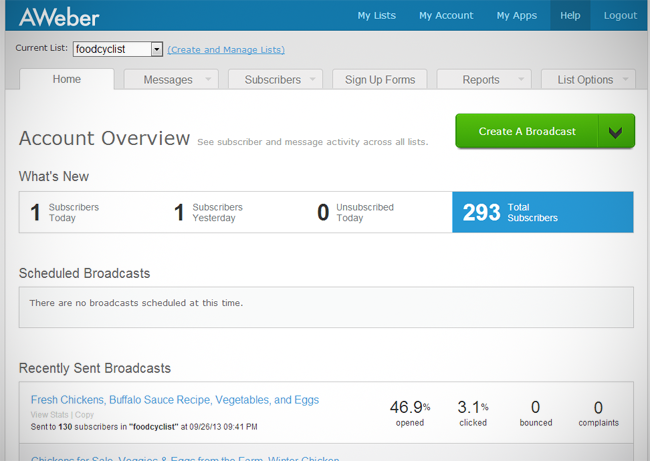
That's right, I only currently have 147 subscribers. Not 147,000, just 147. Truth is, that is all I needed this year. I have a 45 member Chicken CSA. So minus those people we're at 102 more people. I usually have between 8-15 extra chickens for sale each week. When I send an e-mail out to my list to pre-sell my chickens I sell out each week.
My average chicken goes for around $25. Multiply that times 15 and the list pays for itself pretty quick. That and it gets people to the CSA pick-up who might not come every week. As I start to grow and sell more farm products I can cross promote.
If I needed to sell more birds I would more actively promote my list and get more names on it. But for now this is working quite well. And yeah, some people unsubscribed, that's fine. You only want people on your list that are going to buy. The larger the list the more you have to pay, so it is better to keep it pretty narrowly targeted.
Does everyone open my farm e-mails?
NOPE! According to a study done by Silverpop.com, the average open rate for e-mails is around 20%. Mine averages 50-60%. So of 147 people that's an average of 74(ish) people who see my e-mail each week. With that, I either sell every single chicken, or I am left with a maximum of 1 or 2 for the freezer or my own consumption.
What do my farm e-mails look like?
There are some farms that I know who do a beautiful job of sending out pretty complex e-mails. In the middle of the season I find that hard to do. In general if you give people too much information they run the chance of getting lost. My only goal was/is to sell chickens. So that is what my e-mails focus on.
I create them so they will look good whether they are viewed as an HTML e-mail or as just plain text. Basically, fancy or non-fancy. The e-mail editor with my e-mail provider, Aweber.com, is super-easy to use and get your e-mails out. There are templates you can use that are already designed for you and it's mostly drag and drop.
Here's what one of my e-mails looks like.
That is an actual message I sent to my e-mail list. It scrolls down a little to show some more pictures but you get the point. Really simple, to the point, and with some links to recipes online. I also write out recipes and include other farm news. Mostly my e-mails are about what I have for sale. Now that I am selling vegetables each week I add a list of what was harvested so people can plan recipes of their own.
How do you get started? Free or paid?
When it comes to my business I don't mess around. Well, besides singing to my chickens. There are free options out there that you can use. MailChimp is a decent one. The thing is with various free e-mail list service providers, they don't have a good track record of e-mails getting opened.
What do I mean by that?
When you send out an e-mail from you list provider (free MailChimp) it is more likely to be seen as "spam" by the recipients inbox. That means the e-mail doesn't get opened, and no chickens (or whatever) are sold.
Aweber has a great open rate. They have good customer service, fair prices, and very easy to use software to create your e-mails and manage your lists. I know this because that is who I use to manage my e-mail list.
Seriously, the majority of the money I have made before during and after I signed up all my CSA members was through my e-mail list with Aweber. I cannot say enough good things.
A little video help:
Aweber has put together some videos to help you get started. I will paste them in here so you don't have to go looking. The first is a video of some testimonials from clients that they have. Keep in mind as you are watching what an e-mail list could mean for you.
I sincerely hope this blog post helps you. I will go into further detail about my e-mails and my list this winter but I wanted to get this up so you could see how much it has helped me.
The important thing to remember is that it is never too late to start, and you don't need a million people on your list.
Thanks for taking the time to read this. If you have any questions about e-mails lists or farm marketing in general I respond quickest on Facebook.
Cheers!
Disclaimer: Some of the links to on this page are Affiliate links. That means I earn a tiny commission from them by recommending you. There is no additional cost to you. Aweber just likes to award people for recommending them. I wouldn't recommend it if I didn't use it personally, I am not trying to sell you anything. If you have any questions please feel free to contact me.
In order to keep on top of market trends, grow your business, and keep paying the bills you have to be willing and able to adapt to what the market is calling for. That doesn't mean if you are a poultry farmer you need to start raising vegetables, but perhaps you can do something different with your chickens than you are already doing. That is exactly what I am thinking as I look to the future.
The wonderful thing about me doing these interviews is that I personally learn so much when I am doing them. While I would consider myself an expert and I certainly have a lot to share, there is still always so much more to learn. The only time you have it wrong is when you think you know it all.
Businesses change all the time. You need to keep your mind open to see what changes are coming and how you can adapt your agricultural business to ensure that you can still afford to follow your passions for years to come.
Today's guest shares his story of how his business has evolved over the years to become more efficient and more profitable. Ralph is always looking to the future while learning from the past.
(This is John) I met Ralph by chance by showing up at his door one day and introducing myself as the guy who was going to raise chickens locally that year. Well after introductions we became friends, both with a passion for what we do. Ralph is a wealth of knowledge as well as analytical thinking.
The great thing about Ralph is that he has tried a lot of things to make his farm business profitable. He'll always tell you he's working on it and that it's not perfect yet, even after over a decade in the business.
White Silo Farm is a small specialty winery. Their wine is produced and bottled on premises from farm grown fruit.
Experience the charm of an earlier era by touring the old barn where the winery is located. Visit the fermentation, bottling, and corking rooms where the classical art of wine making has been preserved. Walk the fields or relax in one of our outdoor gardens. Guests are welcome to bring lunches. If you prefer, they also make gourmet box lunches and cheese plates. Advance notice is required for box lunches
Twenty-six years ago their family purchased a portion the spectacular Upland Pastures dairy farm. Their intention was to continue the farming tradition and preserve the land for generations to come. They planted our first crop of raspberries, then blackberries and rhubarb. For the next fifteen years they operated as a pick your own berry farm. In 1990 we opened our winery. The 1800?s dairy barn was renovated and converted to our wine tasting room and production area. In 2010 we planted our first acre of grape vines. They expect to harvest our first small crop of grapes in the fall of 2012. (which they did just before the interview)
What value added products can you create from stuff you are already growing?
How can you stay ready to adapt to suit the needs of your market?
--
My skills are ever-evolving as an interviewer. Thanks for taking the time to listen in, and let me know what you think. You can leave a comment below, send me an e-mail, reach me on Facebook or Twitter, or leave a 5 star rating in iTunes if you liked the show.
I have been highlighting the farms and people that have helped me get a start with my farm this year. After all, I have a lot to thank them for. As I listened back through some of the episodes recently I noticed a glaring omission. Kate!
My wife, Kate, is the reason I am able to do what I am able to do. Even as I write this she is watching our daughter Mabel so I have some time at the computer. She's an incredible person, and this relationship would be nothing without her.
Whether it is your wife, your partner, your co-workers, your volunteers, your CSA members, or your friends, there are a lot of relationships that surround a farm. Maintaining and working at those relationships will be the key to your success.
I have said it many times, you cannot farm alone. Well, you can, it just stinks. You are going to want people around you, and if you want to be productive and successful there are certain things you have to do to keep them happy, as well as keep yourself happy.
On today's episode Kate and I talk about some of the things we do to help keep our relationship healthy. After almost 10 years of being together, 3 of them married, we have put our relationship through just about every test you can imagine. We have come through all of them stronger and closer and we now share that with our daughter.
Today's farm podcast is from the heart, with a practical message. I hope you enjoy and thank you for listening.
The difficulties with decision making and following your gut
Best practices for best relationships
Interview with Kate Suscovich:
My family has been the most important element of starting my farm. My wife Kate the most important and influential of all. I run decisions, ideas, thoughts, concerns, pretty much everything by her. Our relationship has developed and grown a lot over the years and we are happy that we are now growing our family and a new generation of farmer.
Kate holds a Masters of Education and work at a school in town. She is an amazing mother, fantastic support for me, and a great friend to anyone she meets.
What can you be doing to better communicate at home and at work (if those two places are not the same)?
Is there someone in life that causes drama, frustration, or unrest? Can you start to phase them out of your life in exchange for someone that is going to enrich your life?
--
My skills are ever-evolving as an interviewer. Thanks for taking the time to listen in, and let me know what you think. You can leave a comment below, send me an e-mail, reach me on Facebook or Twitter, or leave a 5 star rating in iTunes if you liked the show.
Farming is not something that anyone should have to do alone. I have tried it, it's not great. I strongly feel that the more people you can involve with you farm the happier you will be, also more successful.
You don't always get to choose the people who work with you on your farm. That's often a great thing. When you work as a farm manager under a board of directors that can go either way. They can either be your best friends, or huge pains in the behinds. In the case of Sullivan Farm, Joe tells us in the interview that he loves working with his board of directors because they bring a diverse skill set to the (farm) table.
In the beginning of the episode I talk about a very important part of farming. That important part is working with people. There are SO many people interested in agriculture these days and not all of them want to get their hands dirty. I mean, it is really hard to find people who want to process chickens with me. Even if they do not want to learn how to properly scald and pluck a pastured chicken, they may be able to help you farm out in other ways.
Whether it is accounting, marketing, grant writing, sign painting or whatever, everyone has something to offer. Your job is to keep their fire burning and find a place where you have a weakness to fill with their strengths. Do not "poo poo" someone's offer of help just because they don't want to play in the dirt with your or they don't know how to fix a tractor. There are too many things to get done, and those things are too diverse in nature.
Oh, and don't feel like you're using people if you accept volunteers. People volunteer all the time at all manner of things. As a farmer we work longer hours than most, we make less money than most, and we face more hardships than most. People are starting to see that, and they are starting to pitch in to make it a little easier. The "system" is kind of built against small farmers, but that doesn't mean the other people living within that system aren't willing to help.
Again, your job, take care of your volunteers. Just because they are not asking for pay doesn't meant you shouldn't give them something. If they are coming for the day, buy them lunch. If it's hot outside provide Gatorade or an ice cream. Think of it this way, if you were to hire someone for the you would at least have to pay them minimum wage. In CT that's $8.25 an hour. For an 8 hour day that's $66. If you buy that person an $8 lunch they still saved you$58. The point is, be willing to accept volunteers, but please take care of them and don't abuse their kindness.
Connecticut native, Joe has worked on a variety of farms after his time at the University of Maine. Joe has been planning and working on the variety of vegetables in the fields, managing and teaching the college and high school workers, apprentice, and interns and all other odds and ends on the farm for the past two seasons.
How are you leveraging other people's passions to help grow your agricultural business?
What nice things have you done for your volunteers/workers to thank them?
How are you keeping your "team" motivated?
--
My skills are ever-evolving as an interviewer. Thanks for taking the time to listen in, and let me know what you think. You can leave a comment below, send me an e-mail, reach me on Facebook or Twitter, or leave a 5 star rating in iTunes if you liked the show.
Education is crucial on the farm, especially as consumers are becoming more aware of what is in their food. Questions are being raised as to whether what we are eating is healthy or not. The public is eager to know just who their farmer is. It is up to you to feed that need, provide the answers your (potential) customers are looking for, and become "their farmer".
On my farm this year I have done, and continue to do a whole lot of education. It is pretty hard to sell someone a whole chicken when they don't know what to do with it once they get it. I not only provide my customers with information on where the chickens come from, how they were raised, and how they meet their end, I also give them advice on what to with with a whole bird once they get it.
Sharing all of this information has helped me not only get customers, but keep them happy. Some of the avenues I use to keep my members in the loop are:
There is another form of farm education that is equally, if not more important. That is simply showing kids how things are done on the farm. The biggest shock to me when I started my investigation of our food system was how ignorant I was. There was this whole other way that I had never really been privy to.
You have the power to effect a generation with your farm. You can give kids that glimpse into the life of a farmer that will give them a deeper appreciation for their food, might encourage them to live healthier, and will have a trickle up (down and all around) effect as they grow up. Who knows, one day they might grow up to start a farm of their own and a podcast to go with it.
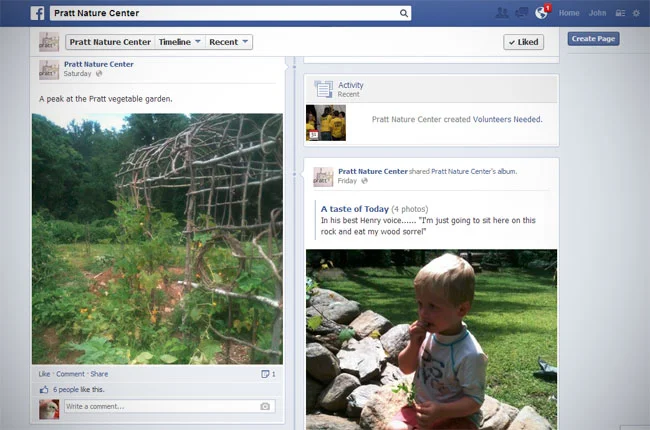
My guest today runs a successful Nature Center that helps educate about agriculture and its' effect on the world. The real success if the education the kids and adults are receiving when they visit the Pratt Nature Center. However, seeing as this is the Growing Farms Podcast I asked Diane all about how she got started and how she gets all those kids to attend.
Diane Swanson joined the Pratt Nature Center as the Program Director in June 2010 and was named the Director in December 2010 and Executive Director in January 2012. For over 20 years, Diane has been working with the youth of New Milford.
Diane credits her parents for her love of nature. Her parents, residents of New York City, provided her the opportunity to connect with nature by spending summers and weekends in the New Milford area. She learned to enjoy nature by digging in the dirt, climbing trees, swimming, building forts and catching frogs.
Diane is looking forward to re-connecting the children, the families and the community with nature and helping them reap the social, emotional and academic benefits that nature provides.
Diane received her B.A. in Elementary Education from Concordia College, Bronxville, NY in 1990.
The Pratt Nature Center
The Pratt Nature Center is a 201-acre wildlife preserve and environmental education center in Litchfield County, CT. The land is diverse - with a mountain, meadows, woods, wildlife, gardens, farm animals, a stream, a pond, and wetlands, providing wonderful opportunities for outdoor fun, discovery and adventure!
Pratt Nature Center offers hiking, bird-watching, community garden plots and nature education for all ages including programs tailor-made for the classroom or scout troop as well as for family or community enjoyment and learning
What are you doing to educate your customers? Are you on Social Media? Do you have a website?
How could you benefit from opening up your farm (more) to visitors to allow for teachable moments?
--
My skills are ever-evolving as an interviewer. Thanks for taking the time to listen in, and let me know what you think. You can leave a comment below, send me an e-mail, reach me on Facebook or Twitter, or leave a 5 star rating in iTunes if you liked the show.
"Every accomplishment starts with a decision to try." - Gail Devers
That statement is so simple, and so very true. I am 28 years old and I feel like I have already accomplished so much in my life. I have lived in New York City after growing up in Connecticut. I worked for the "King of All Media". Competed as a road bicycle racer in Manhattan. Married the woman of my dreams. Rode a bicycle across the United States (with dream-woman-wife-lady). Fed 1,000 people for a summer working on an organic farm. I started a successful farm of my own from scratch. And I now have a healthy beautiful daughter.
Those are some of the larger accomplishments. They all happened because I decided to do something with my life. Those who never get off the couch and "try" have no right to complain that life is boring.
I am not saying that you have to ride your bicycle 5,500 miles visiting family farms (though I highly recommend it). My dreams are not everyone's dreams, that is what makes them unique. I am saying that you should find something you are passionate about and pursue it.
Was it easy? Hell no. Some of those decisions were no-brainers, and some took me years to act on, but act I did.
Will you fail at some things? Absolutely, but not always.
Will people put you down, call you stupid, "poo poo" your dreams, and treat you like a fool? For sure.
Will there be times where you hate what you are doing and you will wish for your old life back? Haha, yeah, but those times don't happen too often.
Is it all worth it? With all of my heart and from a place of having done it myself, YES! Good or bad, it is worth every second.
You will never know if you do not try. It is both simple and horribly complex. When it comes down to it, your life is what you make it. If you wait until retirement you life will pass you by and you will be too old to do some of the things you wanted.
"But John, I don't have money. I have kids. I have a house. I have obligations. I can't because of this. I cannot because of that." There are a million reasons to say no to something. And at least one good reason to say yes, because YOU want to.
I know a family who bicycled around SouthEast Asia for six months. Husband, wife, and two little girls who were toddlers at the time. Kate and I afforded to bike across the states because we lived off peanut butter and jelly and illegally camped in the woods. If you really want to do something you will find a way to make it work.
I have been intensely fortunate in life. If you use my fortune (which was not financial fortune) as a comparison to your own life then that's just another reason you are creating to stay in your safe zone. I believe that good things happen to and for me because I work my a** off to bring good to the world. The fact that the world sees fit to give good back makes me work that much harder.
This farm podcast episode and my show notes here are purposefully passionate. I put my heart into everything I do. I hope that you come away from this with some of my fire and some of my energy to do good in your life, and for the lives of others.
In this farm podcast you will learn:
...that I have the most beautiful new daughter in the world!
Pursuing your passions is one way to a happy and fulfilling life
How to get past nay-sayers
The good, the bad, and the ugly of following your dreams
Even I am behind on paperwork as running a farm in July is getting the best of me
What would you do if you had no other obligations in life?
What is keeping you from doing it? ...and how can you change that?
--
My skills are ever-evolving as an interviewer. Thanks for taking the time to listen in, and let me know what you think. You can leave a comment below, send me an e-mail, reach me on Facebook or Twitter, or leave a 5 star rating in iTunes if you liked the show.
If you want to succeed as a small (or large) business you have to market your products. The only problem with farm is that the margins can get pretty slim. That is when us crafty folks break out the guerrilla marketing techniques and find out way into free or cheap media exposure.
In today's episode I share a story about some free media attention that I received this year that led to me landing a place to farm, getting me some customers, and giving me a little security about land in the future. You can find my press release and article a little further down in the show notes.
Even if you cannot find the time to send press releases now or to really put out any marketing, you should be taking pictures. The pictures you take now while your farm is in full bloom with come in handy when you are getting press out of season. I walk you through some basic photo editing on my farm photo page here.
I bring on the show an experienced farmer and journalist Troy Bishopp the Grass Whisperer. Troy brings a great knowledge-set to the podcast with both perspectives from being a farmer and working in the media. This episode is a "must listen" if you want to get some free exposure for your farm.
It is not every day you make a friend from complete stranger. Troy came to my farm to learn a little more about what I do and to get some help creating videos and to be on the podcast. Given that I was horrifically sick when he got here, Troy turned into more of a savior than a guest.
Since Troy's time on my farm picking up my slack we have kept in touch to compare notes and just keep in touch. Troy is a great guy and I respect the balance of professionalism and goofiness that he brings to the tables.
In farming you learn the most from other farmers. All advice comes with a grain of salt and not everyone's advice will work for you. I have spoken with hundreds of farmers of the years and I have found out one thing about Troy. When he talks, you listen.
The thing about the Grass Whisperer is that he not only wants to farm, he wants other people to farm and is willing to work toward that. He strives to inspire and educate as well as practice what he preaches.
What would more exposure do for your farm? Increase sales?
Are you prepared for an interview should an opportunity present itself?
What would you want to get out of more exposure?
--
My skills are ever-evolving as an interviewer. Thanks for taking the time to listen in, and let me know what you think. You can leave a comment below, send me an e-mail, reach me on Facebook or Twitter, or leave a 5 star rating in iTunes if you liked the show.
I had a hard time with the title of this podcast because I couldn't decided whether I should write that I have big news AND the Grass Whisperer came to visit my farm, or it IS the big news that the Grass Whisperer came to my farm. It was a tough call because it sure was great having Troy on my farm.
There was a bunch of big news preceding the interview with Troy Bishopp the Grass Whisperer. The first is that I got a job. That's right, I took a job, and I am super excited about it. I am going to be the a farm manager and operations director for a farm that is starting a brewery and distillery in addition to their pastured egg operation.
Over the next month I will be moving my entire farm operation to their land where I can run my chickens and fulfill my work obligations to the new farm at the same time. Sure it is going to be a lot of work making the transition, but I will manage.
I just love that I can keep my business and make some extra money on the side. Takes a little pressure off me, and I really think it is a match made in heaven with this farm.
Farm podcast every other week!
That's right, I am scaling back. I am finding the farm, the baby coming, and the new job to be a lot of work (who knew?) Since the podcast is currently not generating any revenue, and it takes me a lot of time to put it together only to give it out for free, I am going to start putting up episodes every other Tuesday.
This will break a few hearts, and completely not effect others. I love doing the show, and I will always continue, but I think for the time being less is more. Besides, it is becoming increasingly difficult to get guests as they are all out in the fields working.
What type of electric fence charger you should be using.
Putting together a grazing management plan.
The importance of writing things down.
Planning for fun.
Interview with Troy Bishopp The Grass Whisperer
It was an absolute pleasure having Troy come down for two days. I was really sick those days and was still going to do all the chicken chores, but The Grass Whisperer was in town.
I learned a lot from having Troy on the farm. I hope he picked up a thing or two from me ass well.
Here's an excerp from his page.
Welcome Consumers and Friends of Grass-Based Agriculture. This little farmer friendly website is an extension of the passion we feel for pastures.
It is brought to you by a 5th generation family farm with "roots" firmly planted in sustainable agriculture and a committment towards showing what CAN be done. Our farm family goal guides decisions: We strive for a stress-free life. We want our topsoil covered by diverse pastures harvested by animals, thus recycling solar energy and activating biological life to provide a sustainable profit. We want to regenerate our community with local food. We want to create a savannah for wildlife. We want to create a place for the next generation to thrive.
The writings, speeches, pictures and meat produced around this foundation of keeping the land covered with forage and speaking up for agriculutre is a tribute to our ancestor's hard work and compassion for the people of our community. We are excited about promoting a"Sunshine in every Bite" campaign that will spur everyone to appreciate the financial, environmental and social benefits of a tasty pasture-based system while growing new farm families. Your comments are welcome.
Are you keeping records and making projections so that someone else can help out if something happens to you?
--
My skills are ever-evolving as an interviewer. Thanks for taking the time to listen in, and let me know what you think. You can leave a comment below, send me an e-mail, reach me on Facebook or Twitter, or leave a 5 star rating in iTunes if you liked the show.
It can be awkward, weird, tough, and uncomfortable to mix family and business. It can also be great. Any which way you do it you need to get everything in writing, and keep all the details straight.
I will be the first to admit, Kate and I have not been as up on this as we should be. There is a lot we have talked about, but we haven't been so good about putting it down on paper. I find in general getting things down on paper when times are good gives you something to fall back on when times are bad. Even if it just an answer to the question, "Why did we even do this in the first place?"
In this farm podcast you will learn:
How to hire and fire your own children
How to prepare for when someone kicks the bucket
Tools for productive meetings
The "deadly Ds"
Educating not humiliating, building bridges
Why someone else is not always the problem
Preparing for bad times during the good times
Interview with Jolene Brown Iowa grain farmer and professional speaker
Jolene Brown will have you laughing while you learn! She’s an award winning communicator, and an honored recipient of the Certified Speaking Professional, the highest earned designation of speaking achievement worldwide! She's known as a Champion for Agriculture whether from the platform, in the magazines, on television, or on the radio.
She is a walking-talking spokesperson and consultant for the family-owned business. With her keen insight and result-centered approach, she's been invited to sit at lots of kitchen tables and family business meeting rooms. Jolene has learned what works and what doesn't. She understands the unique challenges facing parents, siblings, in-laws and "outlaws" who work together. Jolene's popular book, Sometimes You Need More Than a 2x4!, contains how-to-tips so those in agriculture can increase productivity, profitability and peace of mind.
As co-owner and active partner on their Eastern Iowa corn and soybean farm, her practical experience includes plugging a grain auger, hypnotizing chickens and entertaining folks behind the equipment parts counter.
Jolene cares deeply about the ag industry and is on a mission to share leading-edge best practices. She's a passionate supporter, promoter and champion for the people who feed, clothe and fuel the world.
Her worldwide audiences appreciate her fun-filled humor and real-life stories. They leave with take home value, great big smiles on their faces and eager to return for more.
How does your family function as a business? Have you detailed it in writing?
--
My skills are ever-evolving as an interviewer. Thanks for taking the time to listen in, and let me know what you think. You can leave a comment below, send me an e-mail, reach me on Facebook or Twitter, or leave a 5 star rating in iTunes if you liked the show.
Time and money. Never feels like there is enough of either. Wouldn't it be great if we could all have a little more time in our day. Perhaps you could use it to spend time with family, grow more crops, or herd more cattle. Who knows? The point is, we need a way to make the most out of our waking and working hours on the farm.
That is where efficiency comes in. Becoming more efficient at what you are doing on the farm will make you more productive you will get more done. Being able to get more things done would be huge.
I know there are things I would love to do for my business and in my personal life, but I just do not have the time. I do not have the time because I have some inefficiencies in my work routine. I spend a lot of time thinking about this as I am out in the field.
In today's episode I discuss what some of my inefficiencies are and what my plans are to change them. I also talk more about my farm and how I am doing with sales and production.
What can you be doing to make your farm more efficient?
What would you do with a few extra minutes/hours in a day?
--
My skills are ever-evolving as an interviewer. Thanks for taking the time to listen in, and let me know what you think. You can leave a comment below, send me an e-mail, reach me on Facebook or Twitter, or leave a 5 star rating in iTunes if you liked the show.
Starting and running a farm is no small task no matter who you are. You can plan until your heart's content, but there are variables and things will inevitably change. That doesn't have to be a bad thing though. You will learn a lot through farming, about farming itself, and about who you are and what you are capable of.
I will be honest with you. I feel like I am constantly behind. I have three weeks worth of things that needed to get done yesterday. It wasn't for lack of planning on my part. I did a ton of planning. You can listen to the beginning episodes of the podcast. But, even though I had a well-laid plan, things have changed.
Everything takes longer than you expect (plan for that). The weather happens, outside forces happen, family happens, sh** happens (especially with 480 chickens). The best thing you can do is to stay positive, still have a plan, and do you best to become a success.
When you are just starting up you want to do a lot of testing. You will be testing what plants grow best, what feed your animals like the best, and you will be testing the market to see what sells the best. I know farmers that never thought they would get into the type of farming they are in now. However, they are good farmers And good farmers are good business people. they listen to what their customers are telling them and they respond with an awesome product.
With all that testing you are not going to want to buy all the infrastructure right away, even if you are able to. Beg, borrow, and steal (don't steal, it's just an expression) until you know two things.
You have a market to sell what you are doing.
You love what you are doing.
If you find out the market is going one way after you bought everything and set it all up, you're going to end up with either a pile of equipment that you cannot use, or worse a pile of product that might rot.
Boot-strapping is not just about saving money. It is about making sure you have the right tools for the right job.
Hill Hollow Farm is a beautiful, family owned and operated, small-scale farm located in Petersburgh, NY. As family members we work together and support each other in our farming endeavors. Currently the farm produces grass-fed beef, pasture-raised pork, and poultry and operates an organic vegetable CSA.
On our farm we believe in leaving the land more fertile than when we found it. This means that anything that goes into our soil needs to be beneficial for the entire biosphere of the farm, from the songbirds to the microbes. As we harness the nutrients in the soil to grow the vegetables in our garden and the grass in our pasture, we also return nutrients to provide continuous stability. Our goal is to encourage people to break free of the industrial food model, enjoy and restore the art and value of cooking, share meals together and buy food that is in line with their values and that enhances our soils, keeps the interest of our future generations at heart and provides optimal nutrition.
Our Basic Values:
Everyone deserves good food. Organic and natural food should be available at an affordable price.
We farm in a way that is sustainable and restorative to the soils we occupy.
Animals raised for meat are treated with compassion and are eaten and sold with dignity and are raised in a manner that is as close to their natural environments as possible.
We strive to build symbiotic relationships with all of the humans, plants and animals that exist on the farm.
We believe that the core component to bringing back the value in social capital, local economy and community involvement is local food production. We all must eat and therefore food has and always will be the one thing that connects us all together.
Do you have at least a rough plan that your follow?
Where is your business headed next? Do you have the resources to get there? If not, do you know where to find them?
If you don't mind helping me reach people:
Positive reviews in iTunes help be a lot. Other farmers are searching for this type of information and your endorsement helps me reach them. Would you mind taking a second and signing into iTunes to leave me a 5 star review. Hay, I might even read your feedback on the show. Here's the link.
--
My skills are ever-evolving as an interviewer. Thanks for taking the time to listen in, and let me know what you think. You can leave a comment below, send me an e-mail, reach me on Facebook or Twitter, or leave a 5 star rating in iTunes if you liked the show.
Branding is super important to your agricultural business whether you are on one acre or one thousand. Branding is not just for the big guys. These days people are even developing personal brands to clearly define how the are represented in the world.
I have worked on developing my brand for years. I have stumbled, fumbled, and walked blindly through a mess of unclear definition(s) to reach the point where I am today. This episode is to help you not waste the same time that I did when it comes to developing your farm's brand.
Defining the fundamentals of why you are farming and what your farm means to you and your customers is the most crucial step when starting your farm business. You brand is your business, plain and simple.
Good Egg Marketing is a Massachusetts-based business that specializes in promoting good food and good causes. Good Egg was hatched by Myrna Greenfield, a seasoned marketer with a passion for sharing good food, helping people, and making marketing fun.
A “good egg” is a phrase that is typically used to describe a “good person,” someone who likes to help others.
A good egg is also an egg that is safe to eat and tastes good. And any egg that deserves to be called good should also be humanely and sustainably produced. Good Egg Marketing aspires to be all of these things: helpful, safe, tasty (tasteful), humane and sustainable. Good Egg clients are based in Massachusetts and nationally, and include farms and food enterprises, small businesses, nonprofits, and consultants. Founder and “Top Egg” Myrna Greenfield works with associates in graphic design, web development, video production, and social media to create effective, affordable marketing campaigns.While Good Egg Marketing is particularly devoted to working with businesses and organizations that produce, provide or promote delicious, healthy, sustainable food for all, it offers services to anyone who is a good egg.
Greenfield has worked in the food and beverage, publishing, health care, and hi-tech industries, and was employee #1 at Equal Exchange, a Fair Trade coffee company. She’s the former director of Communications and Campaigns at Oxfam America and served at many other non-profits, including the Unitarian Universalist Service Committee, Fenway Community Health, and the Child Care Resource Center.
If you have, how are you telling that story to your customers? Is it effectively reaching the right people?
Do you have a farm website to help you tell your story?
--
My skills are ever-evolving as an interviewer. Thanks for taking the time to listen in, and let me know what you think. You can leave a comment below, send me an e-mail, reach me on Facebook or Twitter, or leave a 5 star rating in iTunes if you liked the show.